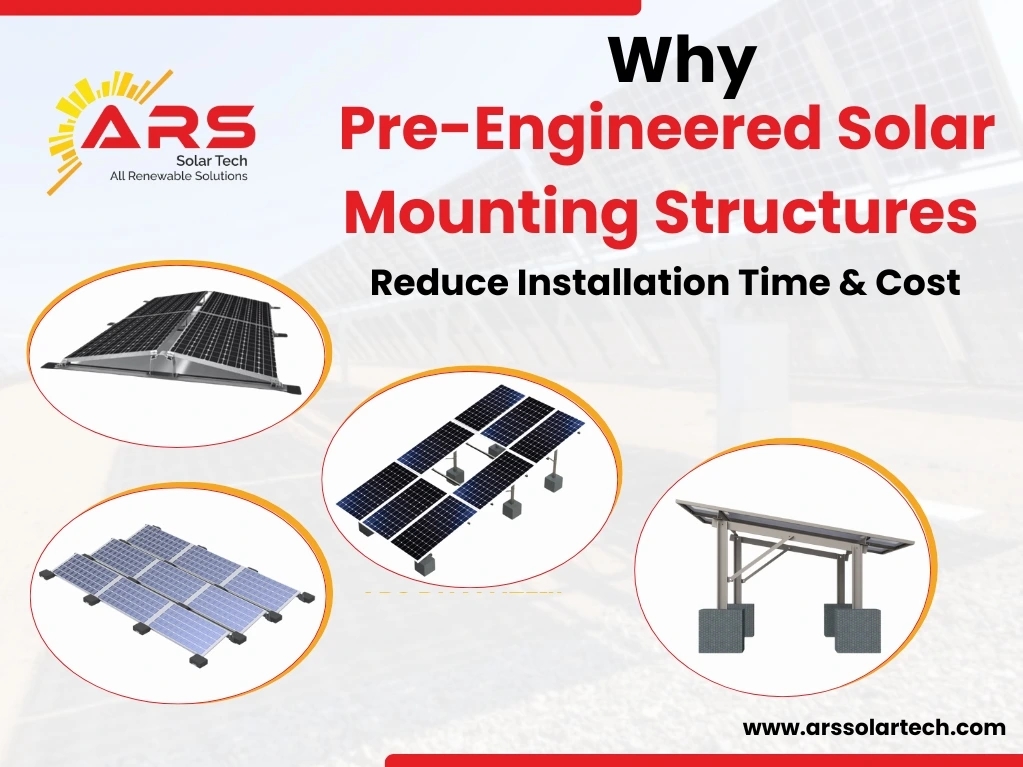

The solar energy industry is evolving rapidly, driven by increasing demand for clean power, tighter project timelines, and strong cost pressures. Developers and EPC contractors are expected to deliver high-quality solar projects faster than ever while maintaining long-term performance and safety. While solar modules and inverters often dominate technical discussions, mounting structures quietly play a crucial role in determining project efficiency. Choosing a pre-engineered solar structure has emerged as one of the most effective ways to reduce installation time and overall project cost.
Challenges with Conventional Mounting Approaches
Traditional solar mounting systems usually involve extensive on-site fabrication. Activities such as cutting steel sections, drilling holes, welding joints, and aligning structures are carried out at the project location. These tasks are time-consuming and highly dependent on skilled labor availability. Site conditions, weather changes, and human error can further slow down progress. Even minor mistakes often result in rework, material wastage, and schedule overruns, all of which increase costs and reduce project predictability.
The Concept of Pre-Engineered Solar Mounting Structures
Pre-engineered mounting structures are designed, engineered, and manufactured in a controlled factory environment before being delivered to the site. Each component is produced according to predefined specifications and quality standards. Instead of improvising during installation, teams work with ready-to-assemble parts that fit together precisely. This shift from site-based fabrication to factory-based production fundamentally changes how solar projects are executed.
Precision Engineering Improves Execution Efficiency
Accuracy is a key advantage of pre-engineered systems. Advanced design tools and standardized solar mounting manufacturing processes ensure dimensional consistency and structural reliability. Components are manufactured using precise tolerances, which eliminates alignment issues during installation. When parts fit correctly the first time, installation teams can maintain steady productivity without interruptions caused by adjustments or corrections.
Modular Design Enables Faster Installation
One of the primary reasons these systems reduce installation time is their modular design. Components are designed to be assembled in a specific sequence, allowing crews to follow a repeatable and efficient process. Since fabrication work such as welding and drilling is completed in the factory, on-site activities are limited to positioning and bolting.
This approach significantly shortens installation cycles and supports fast installation solar projects, particularly in large ground-mounted plants where speed and repetition are critical to meeting commissioning deadlines.
Reduced Labor Dependency and Simplified Workforce Planning
Skilled fabrication labor can be difficult to mobilize, especially for projects located in remote areas or when multiple sites are under construction simultaneously. Pre-engineered systems reduce dependency on highly skilled on-site labor by transferring complex work to the manufacturing facility. Installation teams mainly require assembly skills, making manpower planning easier and more predictable.
This simplification not only saves time but also reduces the risk of labor-related delays, which are a common cause of project overruns.
Material Optimization Lowers Structural Costs
Cost savings begin at the design stage. Engineers optimize material selection and cross-section profiles based on structural load calculations, wind conditions, and soil parameters. This prevents overdesign and avoids unnecessary steel usage. Efficient material utilization directly reduces procurement costs while maintaining safety and compliance.
When combined with reduced wastage at site, optimized design contributes significantly to overall cost reduction.
Shorter Project Timelines Improve Financial Performance
Time is a critical factor in solar projects. Delays in construction often lead to postponed grid connectivity and loss of potential revenue. Pre-engineered mounting structures shorten the construction phase, enabling faster commissioning and earlier power generation.
Predictable timelines also improve coordination with other activities such as module installation, electrical work, and commissioning. This integrated execution reduces idle time between trades and enhances overall project efficiency.
Lower Equipment and Site Management Costs
Extended installation durations typically require longer equipment rentals and higher site supervision expenses. By accelerating structural installation, pre-engineered systems reduce the duration for which cranes, lifting tools, and other equipment are needed. Site management costs are also lowered due to shorter project durations and simpler coordination.
These indirect savings often make a noticeable difference in total project expenditure.
Adaptability Across Different Project Types
Despite their standardized nature, pre-engineered systems offer high design flexibility. Engineering adjustments can be made to suit rooftop installations, ground-mounted arrays, or uneven terrain. Customization happens during the design phase without compromising manufacturing efficiency. This adaptability ensures that a pre-engineered solar structure meets site-specific requirements while still delivering speed and cost benefits.
Long-Term Reliability and Reduced Maintenance
The benefits of pre-engineered structures extend beyond installation. Factory-controlled production ensures consistent quality, while protective coatings and corrosion-resistant materials enhance durability. These features are particularly important in harsh environments such as coastal or industrial areas.
Improved structural reliability reduces maintenance requirements over the plant’s operational life, contributing to lower long-term operating costs and better asset performance.
Compliance and Quality Assurance
Established solar mounting manufacturing standards ensure compliance with structural codes, wind-load requirements, and safety regulations. Consistent quality control in the factory minimizes the risk of structural failures and strengthens confidence among investors, lenders, and insurers. Reliable mounting systems improve the overall bankability of solar projects.
Supporting Scalable Solar Deployment
As solar capacity targets continue to grow, scalability has become a key requirement. Pre-engineered systems enable standardized deployment across multiple sites without compromising quality. For developers handling large portfolios, this consistency simplifies planning, procurement, and execution while supporting fast installation solar deployment at scale.
Conclusion
Pre-engineered solar mounting structures represent a strategic shift toward efficiency, predictability, and cost control in solar project development. By minimizing on-site fabrication, optimizing material usage, and enabling faster installation, they significantly reduce both installation time and overall project cost. For developers and EPC contractors focused on timely delivery, long-term reliability, and financial performance, pre-engineered mounting systems are no longer just an option—they are a competitive necessity in the modern solar landscape.