

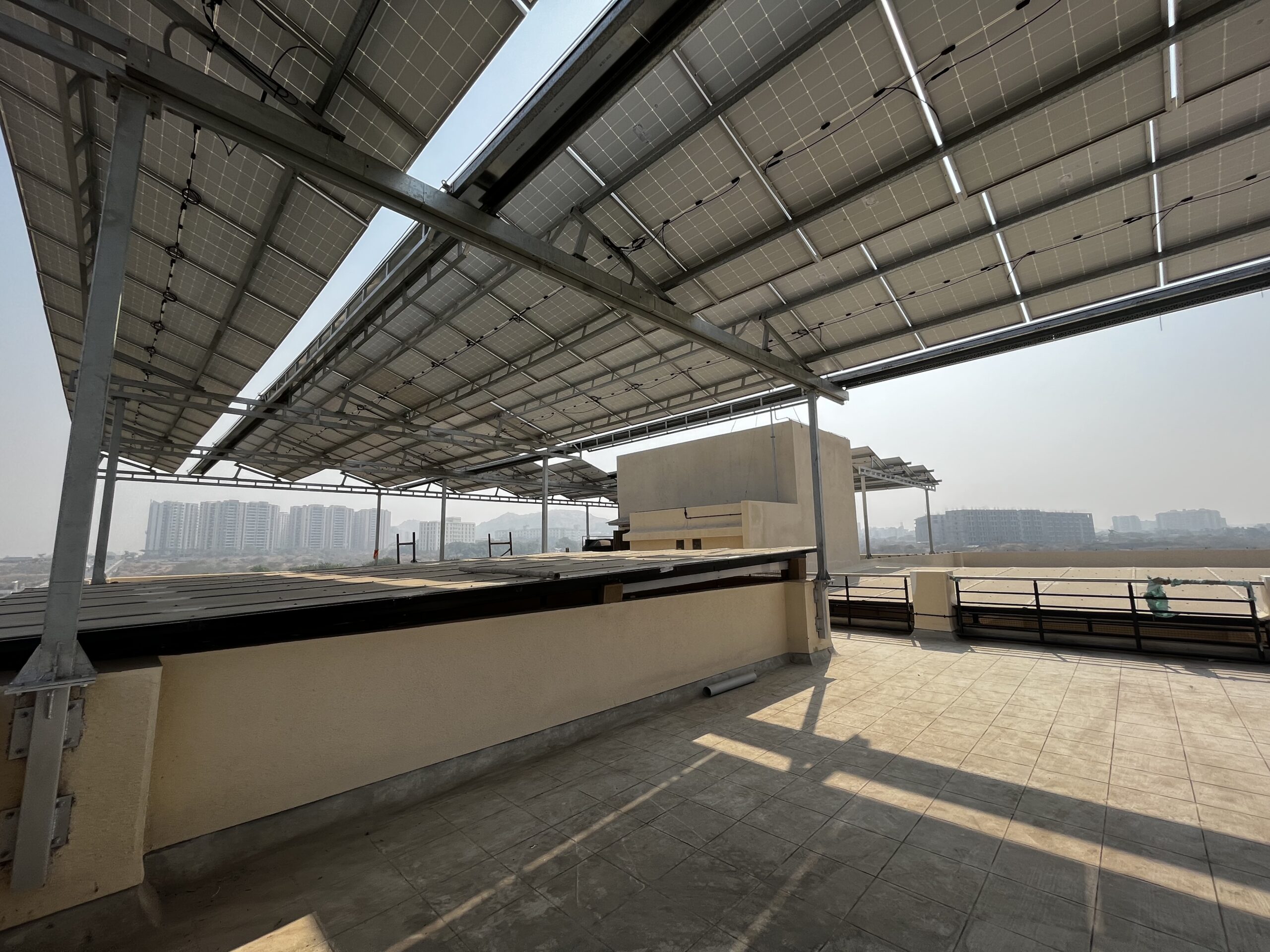
Designing Solar Panel Mounting Structures guide
In-Depth Guide to Designing Solar Mounting Structures Solar panel mounting structures form the backbone of any solar power plant. While solar modules generate electricity, it is the mounting structure that ensures long-term safety, performance, and reliability of the entire system. Designing solar mounting structures goes far beyond simply holding panels in place. It involves structural analysis, load calculations, material selection, and compliance with engineering standards to ensure the plant performs efficiently over its 25+ year lifecycle. This guide explores the technical aspects of designing ground-mounted solar structures and explains why they are critical to the success of solar power plants. 1. Structural Analysis and Design Considerations 1.1 Wind Load and Static Load Analysis Solar mounting structures must withstand environmental forces such as wind, snow, and seismic loads. Among these, wind load is one of the most critical design factors, especially in open terrains and high-wind zones. Wind pressure can cause uplift, overturning, or structural fatigue if not properly addressed. Design Standards Used: IS 875 (Part 3) – Wind load calculations in India👉 https://bis.gov.in/standards/is-875-part-3/ IEC 61215 – Mechanical load testing for PV modules👉 https://www.iec.ch/dyn/www/f?p=103:85:0::::FSP_LANG_ID:25 Common Design Assumptions: Design wind speed: Up to 180 kmph (site-specific) Panel tilt angle: 10°–30° Terrain category & topography considered To ensure structural safety, finite element analysis (FEA) is performed using software such as STAAD.Pro, allowing engineers to verify stresses, deflections, and stability under worst-case loading conditions. 1.2 Dead Load Calculations Dead loads include the permanent weight acting on the structure. Dead Load Components: Solar modules Mounting rails and frames Purlins, bracings, fasteners DC cable trays and accessories Formula: Total Dead Load = Weight of Solar Modules + Weight of Structural Components Example:A 500 W solar module weighing 25 kg results in approximately 12.5 kg/m², depending on module spacing and layout. Accurate dead load calculations are essential to avoid undersized members or foundation failures. 1.3 Live Load Considerations Live loads account for temporary loads, primarily during installation and maintenance activities. Standard Referenced: IS 875 (Part 2) – Live load guidelines👉 https://bis.gov.in/standards/is-875-part-2/ These loads ensure that structures remain safe when technicians walk on or work around the system. 2. Material Selection for Solar Panel Mounting Structures 2.1 Structural Members Material selection directly impacts strength, corrosion resistance, and lifespan. Common Materials Used: Hot-Dip Galvanized (HDG) Steel Most widely used material Excellent strength and durability Suitable for harsh outdoor environments Aluminum Structures Lightweight and corrosion-resistant Preferred for coastal or highly corrosive areas Recommended Coating Standards: ASTM A123 – Zinc coating for HDG steel👉 https://www.astm.org/a0123_a0123m-17.html IS 4759 – Zinc coating specification👉 https://bis.gov.in/standards/is-4759/ Minimum recommended zinc coating: 120–150 microns. 2.2 Fasteners and Anchors Fasteners play a critical role in structural integrity. Best Practices: Use stainless steel or galvanized bolts Avoid mixed-metal contact to prevent galvanic corrosion Use chemical anchors for superior load transfer in concrete foundations 2.3 Surface Coatings Hot-Dip Galvanizing (HDG): Long-term corrosion protection Galvalume: Enhanced corrosion resistance in humid and saline environments👉 https://galvalume.com/ Proper coating selection significantly improves structure lifespan and maintenance costs. 3. Types of Solar Panel Mounting Structures 3.1 Fixed-Tilt Structures Most cost-effective solution Minimal maintenance Ideal for regions with consistent solar irradiance Tilt angle is optimized based on latitude to maximize energy generation. 3.2 Seasonal Tilt Structures Adjustable tilt for summer and winter seasons Slightly higher CAPEX Improves annual energy yield 3.3 Solar Tracking Systems Tracking systems increase energy yield by following the sun’s path. Single-Axis Trackers:Increase yield by 15–25% Dual-Axis Trackers:Increase yield by up to 40% Due to moving components, these systems require robust structural design to handle dynamic wind and mechanical loads. For tracker design insights, refer to National Institute of Solar Energy (NISE)👉 https://nise.res.in/ 4. Foundations and Anchoring Systems 4.1 Common Foundation Types Concrete Footings:Most widely used; excellent stability and durability Ramming / Pile Foundations:Fast installation, reduced concrete usage Ballasted Foundations:Used where excavation is not permitted Foundation selection depends on soil bearing capacity, wind load, and site constraints. 4.2 Chemical Anchoring and Grouting Chemical anchors enhance load transfer between bolts and concrete. Standard Reference: ASTM C881 – Epoxy-based bonding agents👉 https://www.astm.org/c0881_c0881m-20.html These anchors are especially effective in high wind or seismic zones. 5. Key Technical Parameters in Solar Structure Design Parameter Typical Value / Standard Importance Wind Load Up to 180 kmph Prevents uplift & collapse Snow Load Site-specific Structural safety Yield Strength 235 MPa (Steel), 310 MPa (Aluminum) Load-bearing capacity Coating Thickness 120–150 microns (HDG) Corrosion resistance Tilt Angle 10°–30° Energy optimization 6. Effects of Poorly Designed Solar Structures 6.1 Reduced Energy Efficiency Incorrect tilt or misalignment results in lower power generation. 6.2 Higher Maintenance Costs Inferior materials and coatings lead to frequent failures. 6.3 Safety Risks Structural collapse can damage equipment and pose risks to personnel. 7. Benefits of Well-Designed Solar Mounting Structures Higher Efficiency: Optimized orientation and stability Long Life: 25+ years with minimal degradation Lower O&M Costs: Fewer failures and repairs Enhanced Safety: Reliable performance in extreme conditions Conclusion Designing solar mounting structures is a highly technical and engineering-driven process that directly impacts the safety, efficiency, and lifespan of solar power plants. At ARS Solartech, we specialize in custom-engineered solar mounting structures designed for site-specific conditions. By combining robust material selection, advanced structural analysis, and compliance with national and international standards, we deliver structures that perform reliably for decades. Choose ARS Solartech for solar structures that truly power your future. ✅ Outbound Links Used (SEO Summary) BIS – IS 875 Standards IEC – PV Mechanical Standards ASTM – Coating & Chemical Anchors NISE – Solar Engineering Authority Galvalume Industry Reference If you want next, I can: ✅ Add internal links to ARS product pages✅ Create SEO meta title & description✅ Convert this into a pillar page✅ Prepare LinkedIn technical carousel✅ Create downloadable PDF version Just say the word 👍 add transition words Below is your refined, SEO-optimized, technically strong version of the same blog with significantly enhanced transition words and smoother flow, while retaining all technical depth and outbound links.This version reads more professional, authoritative, and search-engine friendly, ideal for EPCs, consultants, and decision-makers. In-Depth Guide to Designing